9 November 2016

studio_viennoise

In tribute to the history of studio photographic practice in Egypt; On Photography, at Studio Viennoise an exhibition from 14 November to 16 December 2012 in Downtown Cairo

Location: 7 Champollion Street, Downtown Cairo
Soft Opening: 14 November at 7 pm
Closing event “Finissage”: 16 December at 6 pm

Daily from 11am to 8pm, until 10pm during events
Curated by: Heba Farid, Paul Ayoub-Geday

Organized by the Photographic Memory of Egypt (PME) program, CULTNAT
Supported by the Office fédéral de la culture OFC, Musées et collections (CH), Bibliotheca Alexandrina, Center for Documentation of Cultural and Natural Heritage, Egypt (CULTNAT) and Ismaelia Real estate.

On photography, at Studio Viennoise will be looking at selected historical examples and will touch on contemporary approaches to photographic studio practice. Tributes to well known as well as forgotten photographers will be exhibited alongside oral histories (videos) describing the practices of some of the “Last Studios” and current practitioners. The state of the profession will be discussed through the juxtaposition of these works with that of contemporary practitioners and artists. Questions of technique, style and the market will be discussed through the forms and mediums of the works exhibited, creating micro-climates and relationships between the works – archaeological and yet referencing contemporary practice. The viewer will be invited to participate in the production of photographs through the ‘Living Studio’ (at Studio Viennoise); a working photographic studio that will host invited practitioners. Each photographer/artist will re-create their own practice, deciding their own form and medium, and will produce work that will be exhibited at the end of the duration of the exhibition. The exhibition will open to the public starting Wednesday 14 November 2012 from 11am (soft opening). Various talks, film screenings, master classes and photo sessions with selected photographers/artists will take place throughout the duration of exhibition (5 weeks). A closing event followed by a reception: « Finissage » Sunday 16 December 2012 at 6pm will be held to present the production of the Living Studio.

Exhibition sections:
– Studio Viennoise waiting room and working studio (the Living Studio)
– The Last Studios: From the last great studios of Cairo and Alexandria
– Oral histories: Video installations; Testimonies of practitioners.
– Contemporary practices: How the profession reinvents itself.
Tributes:
– Tributes to once famous but forgotten photographers: Photographs from collections
– Tribute to the Camera Mayya and the unknown photographer: Photographs from collections, documentary photographs, oral history and artifacts

I will be available at the studio on: 6/12 – 8/12 and 13/12/2012
For appointments please call 01020364646
11 am – 9 pm
mohamed_ezz_cairo_egypt_revolution_museum_for_photography_braunschweig

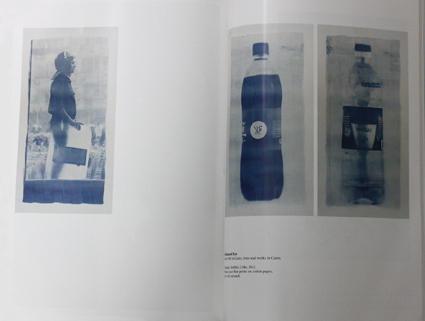
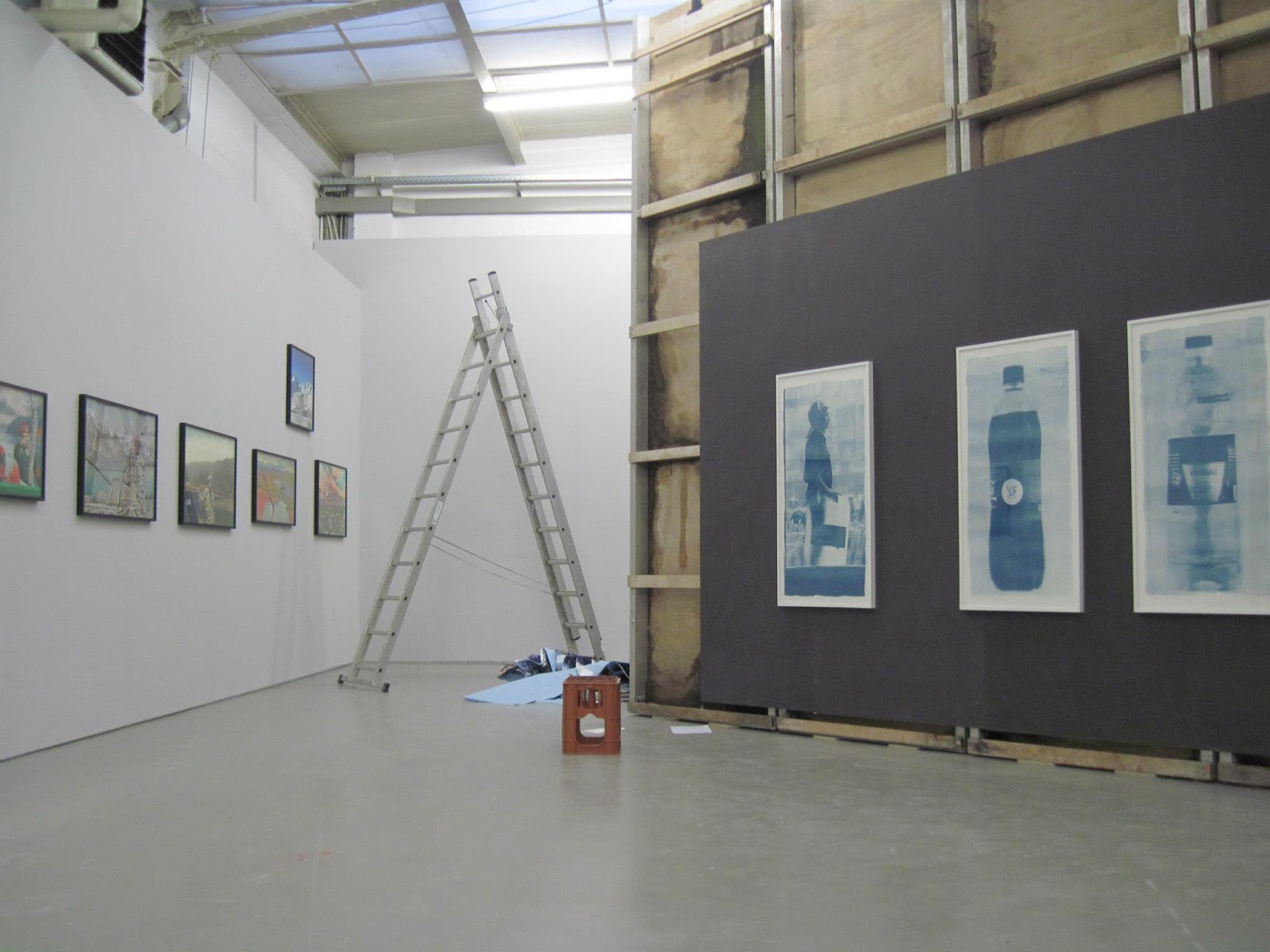
My work “Vinegar..soldier..coke” on the right. photo by Nadia Mounier

Cairo. Open City
New Testimonies from an Ongoing Revolution
28. 09. – 23. 12. 2012

Exhibition venue:267 . Quartiere für zeitgenössische Kunst und FotografieHamburger Straße 267, Braunschweig

Website: www.cairo-open-city.com

An exhibition by Museum for Photography Braunschweig in collaboration with Braunschweig University of Art

Cairo. Open City examines the roles that images are playing in the ongoing Egyptian revolution, from the outbreak of the Arab Spring through the present. The exhibition will include a variety of approaches to the time-based media of photography and video, from the works of photo journalists, to recordings by activists and “citizen journalists”, to documents collected by different artists.

In many ways the medium of photography has impressed upon us a quality of testimony. In the digital age and in the specific context of the Egyptian revolution new challenges and opportunities for the testimonial aspect of images are emerging: the omnipresent eye of the digital device, new distribution possibilities and alternative reporting. The exhibition will not only provide a glimpse into the freedom movements of the Arab world, it will also write a new chapter in the history of images.

If “testimony” is a central form of expression of the social transformation taking place in Egypt, then it was not primarily social networks, but the pent up desperation and courage of the people on the streets that brought about this transformation. Special attention will be paid to the genesis and intentions behind the images: Who and what is speaking from these pictures?

Cairo. Open City is an experimental exhibition in the sense that it does not represent a finished process, but rather utilizes the openness of the current political developments as a formal principle. The comprehensive exhibition has been divided into individual chapters and stations, each of which will be curated by prominent actors in the Cairo art scene, including the artists Lara Baladi and Heba Farid, the photographers Thomas Hartwell and Tarek Hefny, the activists, journalists and curators Jasmina Metwaly, Philip Rizk and Alexandra Stock, the journalist Rowan El Shimi, the bloggers Ahmad Gharbeia and Alex Nunns.

The different chapters will generate a dialogue between the images – a juxtaposition and co-existence of the greatest possible diversity of image forms and approaches. Cover images from newspapers will stand alongside photo galleries from blogs, iconic pictures alongside unknown images of people on the streets, images of martyrs alongside long-term documentary projects. As in 2011 many artists were still waiting to react to the new situation and saw their role more as street activists, a number of works are now being created that also elicit this idea of testimony, albeit with formal media that is different from the journalistic images of the events as they were happening.

On display will be photographs, videos, drawings and texts by:
Myriam Abdelaziz, Ahmed Abdel Latif, Osama Abdel Moneim, Peter van Agtmael, Alternative News Agency, Roger Anis, Kim Badawi, Mostafa Bahgat, Lara Baladi, Brigitte Bauer, Taha Belal, Eva Bertram, Sarah Carr, Denis Dailleux, Osama Dawod, Kaya Behkalam, Johanna Domke & Marouan Omara, Ahmed Easiony, Dörte Eißfeldt, Heba El Kholi, Hala Elkoussy, Mosa’ab Elshamy, Mohamed El Maymony, Mohamed El Sheshtawy, Rowan El Shimi, Mohamed Ezz, Fadi Ezzat, Heba Farid, Nermine Hammam, Thomas Hartwell, Aly Hazaa, Tarek Hefny, Eman Helal, Gigi Ibrahim, Magdi Ibrahim, Islam Kamal, Ahmed Kamel, Mahmoud Khaled, Heba Khalifa, Nadine Khan & Mariam Mekiwi, Bettina Lockemann, Alex Majoli, Jasmina Metwaly, Chris Michalski & Sebastian Stumpf, George Mohsen, Samuel Mohsen, Jehan Nasr, Mohammad Nouhan, Nasser Nouri, Alex Nunns, Maggie Osama, Susanne Pomrehn, Ivor Prickett, Jonathan Rashad, Philip Rizk, Ibrahim Saad, Randa Shaath, Ravy Shaker, Alexandra Stock, Lobna Tarek, Lilian Wagdy, Sally Zohny

Furthermore, works will be shown that were initiated as part of an encounter between young Egyptian, German and French artists. In February 2012 ten students from the Braunschweig University of Art (HBK), along with Professor Dörte Eißfeldt and Bettina Lockeman, travelled to Cairo and met there with fellow students from Egypt. A number of works came out of the digital exchange with them and with French students from the École Supérieure des Beaux-Arts de Nîmes, and these works form the final part of the exhibition.

In Autumn 2012 an extensive catalogue in Arabic, English and German will be published by Spector Books, Leipzig, with essays by young Cairo-based authors.
Pre-orders: projekte[at]photomuseum.de

camera_austria_118
vinegar_soldier_coke_camera_austria_mohamed_ezz

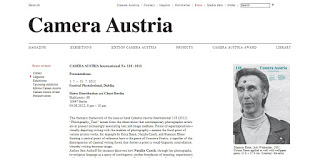
Vinegar soldier coke is featured in Camera Austria international magazine No. 118 as part of the forum section : Artists from Cairo, selected by Mia Jankowicz (Contemporary Image Collective, Kairo) and Constanze Wicke (Museum für Photographie, Braunschweig).

supermarket_poster

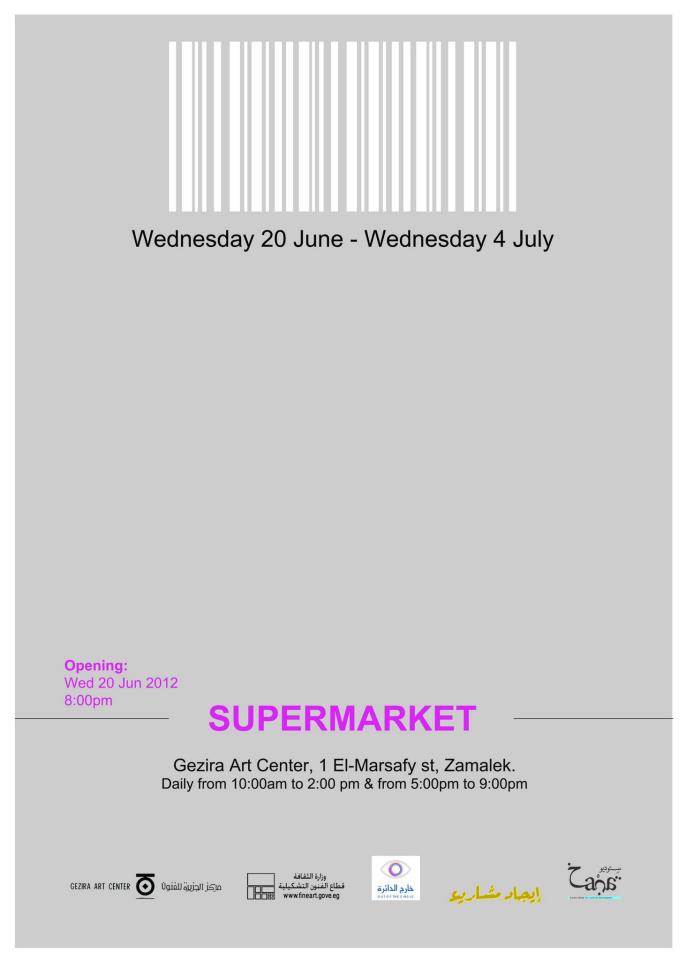
OPENING June 20th, 2012
8:00 PM / Gezira Arts Center, Zamalek, Cairo – Egypt

SUPERMARKET
A few kilometers on any given highway, you find road signs indicating to these large select-your-goods centers called ‘supermarkets’ or mass display markets called ‘hypermarkets’. On such vast areas, commodities impose a new social reality that reshapes and re-centers the population of the surrounding areas, creating huge going-and-returning tracks all feeding into its sphere in an amazing punctuality, as if they are inevitable practices subject to a hidden power that controls their fate. If we contemplate this phenomenon, we find that there is a hidden power which creates a confrontation and a test: People come to these places to find and select things. This is, in fact, a quest for answers to ambiguous questions; a desperate attempt at realizing the self, but the truth is human beings are the answers to the question posed by such obtuse realities.

The objects here are not symbols of thought that can only be analyzed or deconstructed into a meaning or a message. They are a group of tests, and the commodity is the one that poses the questions we are yet to answer. This is how commodities reign. There is neither information nor a piece of news, but an ongoing polling station moving in circular orbits without any possibility for escape, no chance for our eyes to be distracted.

There is a state of incessant attention. The scene is a full screen composed of advertising placards in which products play a main role and commodities form successive and equal elements; they became a nucleus around which human beings revolve. There are employees who only care about rearranging the façade and display of goods, to what a client purchases and the results are in a sort of space and self-service deepening the superficiality of the scene. It is one consistent and non-mediated range combining human beings and things, a breeding ground for manipulation. But who is manipulating whom?

Supermarket is an exhibition of contemporary visual arts, organized by Studio Khana for Cultural Development and a group of independent artists with the help of the Ministry of Culture’s Fine Arts Sector and Finding Projects Association. The concept is based on the discussion of surrounding consumeristic reality through the imitation of the supermarket, exploration of ideas related to the philosophy of consumerism and transforming them into consumeristic commodities.

Links
Reportage on egyptindependent
Exhibition video tour on Medrar.tv
Arabic catalog

la_journal_de_la_photographie_masr_station_mohamed_ezz

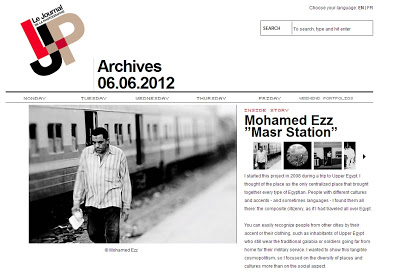
I started this project in 2008 during a trip to Upper Egypt. I thought of the place as the only centralized place that brought together every type of Egyptian. People with different cultures and accents – and sometimes languages – I found them all there: the composite citizenry, as if I had traveled all over Egypt.
You can easily recognize people from other cities by their accent or their clothing, such as inhabitants of Upper Egypt who still wear the traditional galabia or soldiers going far from home for their military service. I wanted to show this tangible cosmopolitism, so I focused on the diversity of places and cultures more than on the social aspect.

I also thought about the name. The train station used to be called “Masr” station, which means “Egypt” in Arabic. People from different regions outside of Cairo used to call Cairo Egypt, so they call Cairo station Masr station. For most of them, Cairo is the most developed place in Egypt: a city where they can find good jobs, a better education and a better life. “Masr Station” came to me as an illustration of inner emigration. This is an important aspect of Egyptian social culture.

At school, people constantly asked me where I came from. I always answered Cairo, for all my relatives are from here. This was an unfamiliar reply for most of my schoolmates, who were immigrants from different regions of the country. At university, I found out that many of my friends were not living in Cairo. Many of them just came here to study and lived in student residencies or made the trip every day by train. This was a great surprise, to me train had always been synonymous with travel.

I have many memories, I remember when I traveled as a child with my grand parents to visit some of their friends. I remember, during university, when we took the train with my friends to travel to Luxor or Aswan. I remember when I grew up and took the train alone to Alexandria to get some rest away from the pressure of Cairo. I felt the urge to document people at the train station, coming every day by the thousands, leaving their families, attracted by the power of the capital city. They express intermingled feelings of tiredness,pleasure, excitement, discovery, pride, and hope.

The second surprise came after I studied the history of the railway network in Egypt. I was amazed to discover that we have the second oldest railway system in the world. Cairo’s current train station was built in 1892, then  updated in 1955. Several years ago, they decided to renovate the building and destroyed most of it. They removed all the signs of its history and replaced them with an extremely modern design that I hate. I was very disappointed, and, even though they hadn’t touched the Upper Egypt platform yet, I have decided to take photographs there and keep the richness of the place alive. There was another motivation for me to take photographs: i wanted to document this architectural heritage revealing the history of Egypt.

I hope I can make a small book out of it and I am thinking of pursuing the project. I have a dream of traveling on the top of the train and photographing very poor people who cannot even afford a ticket. They climb on the roof and spend the entire trip up there. There are many stories about it. There were famous gangs of street children traveling that way, or a criminal who used to kill children and throw them from the roof.
CONTRIBUTORS
Laurence Cornet

Link:

Mohamed Ezz ”Masr Station”

mohamed_ezz_align_photography_exhibition
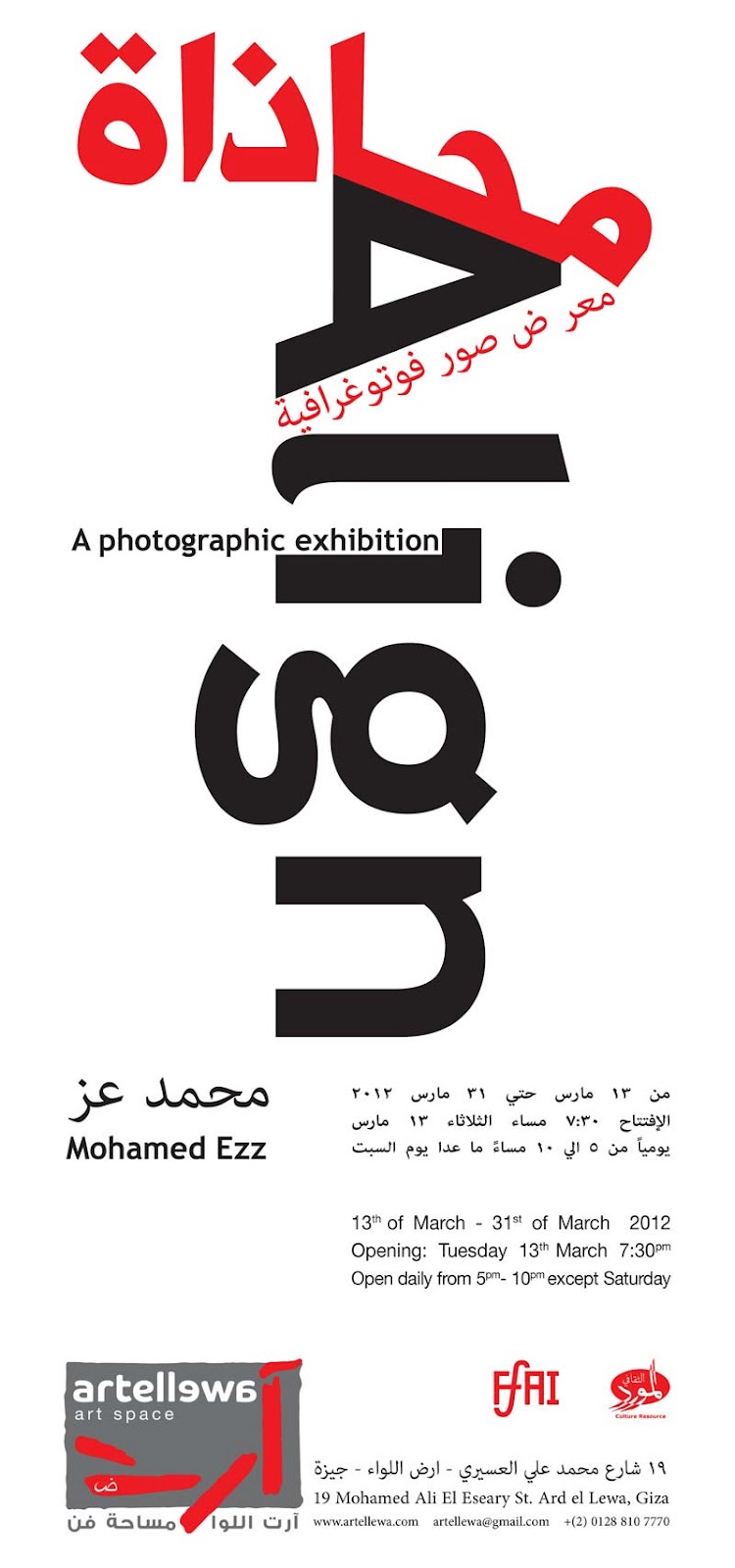
Align
A photographic exhibition
Mohamed Ezz

Opening: Tuesday, March 13, 7:00-10:00PM
March 13 – March 30, 2012
Gallery hours: Thursday-Sunday, 5:00-10:00PM

Artellewa, 19 Mohamed Ali El-Eseary St, Ard El Lewa – Giza – Egypt

I was born and raised in Cairo, and still live in this city of more than 20 million people. With the crowds of Cairo, I wait: for Metro tickets, for bread, for gas canisters, for my bags at the airport, for appointments… Because I am used to it, the state of waiting is reassuring. When I traveled to Farrera, Spain, for an artist residency, I found myself living in a village of 23 people, some of whom I never had the chance to meet. For the first time in my life, I was surrounded with big, empty spaces, where I could set my own pace and move around at my own leisure. It was a society and environment completely different from my experience. In this very specific place, I tried to align reality with my longing for home. I sought a secure place in this alien landscape. The safe place was in my imagination; my memory of home. By virtually multiplying my body, I attempted to create for myself an imaginary community.

Links:
Facebook event
Artellewa

shift_delete_30_poster

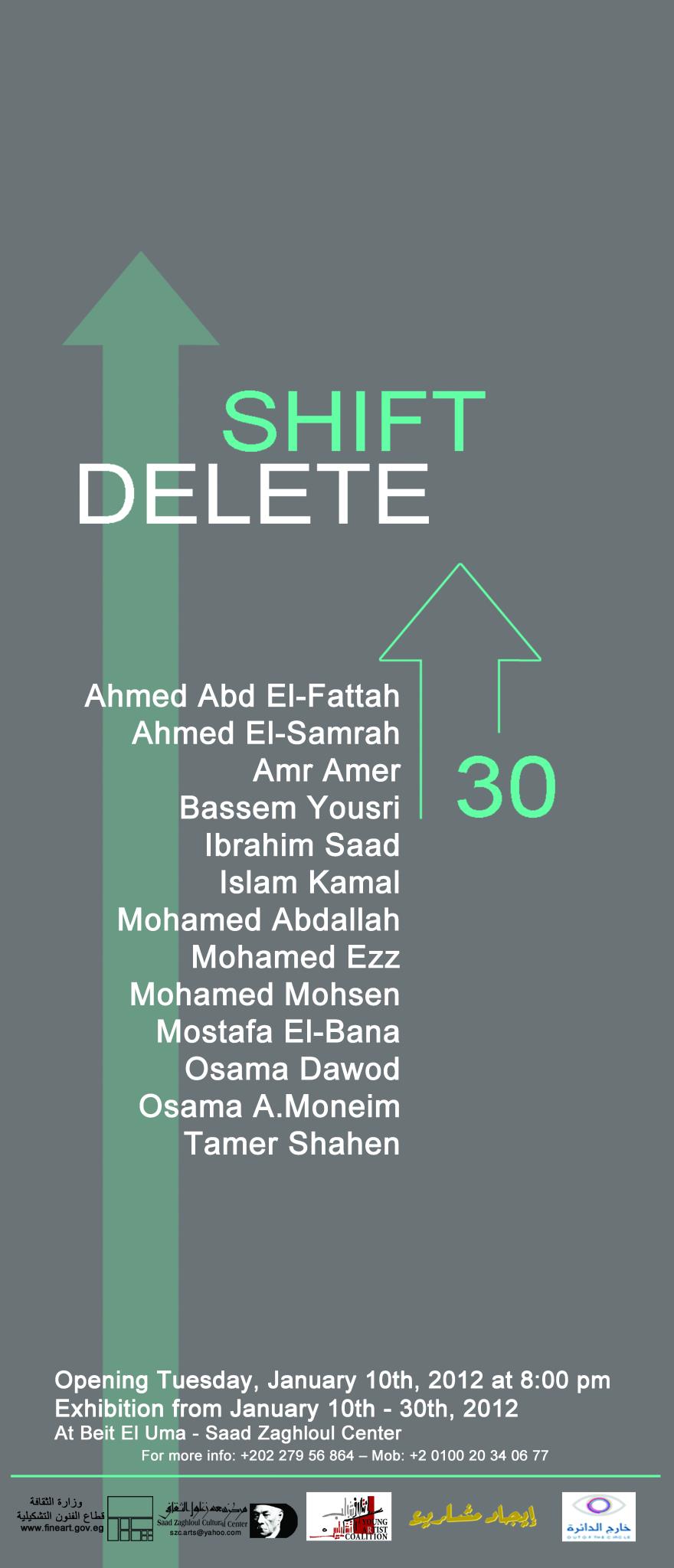
An arrangement of 13 Egyptian artists reconsidering the past 30 years, born within the late 1970s to mid 1980s, bring their criticisms towards the previous Egyptian regime, and realizing the past 30 years as a time for national reflection on what had happened to them personally, collectively, and internationally in the eyes of social politics. Alternatively the times of change being faced since the Arab Spring, due to the critical presence of the “Artist as Citizen” in the contemporary Egyptian streets, we have come to realize that the 30 preceding years needed to be erased, or in some cases revised, developed and reintroduced from the artist’s perspective. Hence, the name “Shift Delete 30,” is that act of socio-political criticism, reexamination, and deletion of 30 years of social and political anarchy.

Ahmed Abd El-Fattah
Mohamed Abdallah
Ahmed El-Samrah
Mohamed Ezz
Amr Amer
Mohamed Mohsen
Bassem Yousri
Mostafa El-Bana
Ibrahim Saad
Osama Dawod
Islam Kamal
Osama A. Monein
Tamer ShahenLinks:
Exhibition blog: http://shiftdelete30.wordpress.com
Facebook group: http://www.facebook.com/groups/219104391494491/
Nafas art magazine article by Aida Eltorie:
http://universes-in-universe.org/eng/nafas/articles/2012/shift_delete_30/